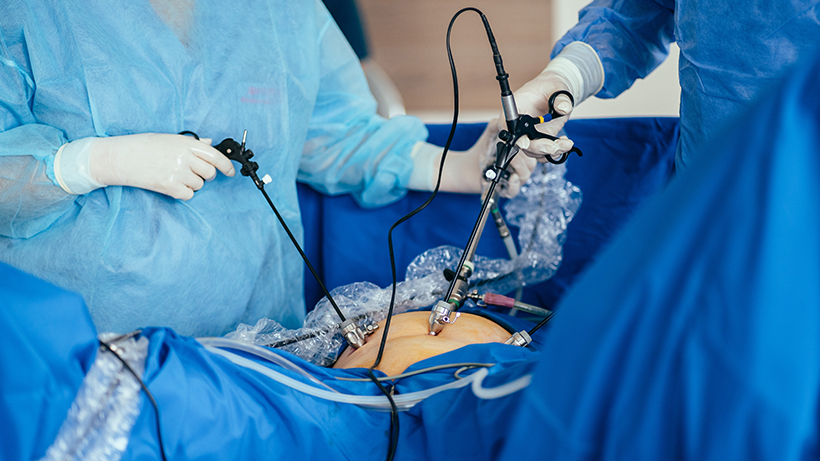
At River & Coast Women's Care, our Minimally Invasive Gynecologic Surgery (MIGS) program offers advanced surgical care that treats gynecologic conditions through small incisions — or no incision at all. For women in Jacksonville and Saint Johns, this means less pain, less scarring, shorter hospital stays, and a faster return to daily life compared with traditional open surgery. Our team pairs surgical precision with a personalized approach, so you understand every step of your treatment and feel supported throughout your recovery.
What Is Minimally Invasive Gynecologic Surgery?
Minimally Invasive Gynecologic Surgery is a group of techniques that allow your surgeon to diagnose and treat conditions of the uterus, ovaries, fallopian tubes, and surrounding tissue without the large incisions used in traditional open procedures. Instead, your surgeon works through a few small incisions — or through the body's natural openings — using a thin, lighted camera and specialized instruments.
Because these techniques disrupt less tissue, most patients experience less blood loss, lower infection risk, reduced scarring, and a noticeably quicker recovery. Many MIGS procedures are performed on an outpatient basis, allowing you to recover in the comfort of your own home.
Procedures We Offer
Laparoscopic surgery. Using a few small abdominal incisions and a camera called a laparoscope, your surgeon can treat fibroids, endometriosis, ovarian cysts, and more — and perform procedures such as laparoscopic hysterectomy, myomectomy, and ovarian cystectomy.
Hysteroscopic surgery. Performed through the vagina and cervix with no abdominal incisions, hysteroscopy lets your surgeon evaluate and treat conditions inside the uterus, such as polyps, fibroids, and abnormal bleeding.
Robotic-assisted surgery. For more complex cases, robotic technology gives your surgeon enhanced precision, a magnified 3D view, and a greater range of motion — all through tiny incisions, with the surgeon controlling every movement.
What to Expect
Before surgery. You'll meet with your provider to review your history, imaging, and treatment options. We'll explain the recommended procedure, answer your questions, and give you clear instructions to prepare.
During surgery. Most MIGS procedures are performed under anesthesia and completed in an outpatient or short-stay setting. Your surgeon uses small incisions and specialized instruments, guided by a camera, to treat the condition precisely.
After surgery. Recovery times vary by procedure, but many patients are back to light activity within days. We'll provide detailed aftercare instructions and follow up with you to make sure you're healing well.
Is minimally invasive surgery safe?
Minimally invasive techniques are well-established and, for many conditions, offer a safer profile than open surgery — with less blood loss and lower infection risk. Your surgeon will review the specific risks and benefits for your situation.
How long is recovery?
Recovery depends on the procedure and your overall health. Many patients return to light activity within a few days and to full activity within a few weeks — typically much sooner than with open surgery.
Will I have visible scars?
Incisions are small, and many heal to be barely noticeable. Hysteroscopic procedures involve no external incisions at all.
Is the surgery done as an outpatient?
Many minimally invasive procedures are performed on an outpatient basis, meaning you can go home the same day. Your care team will let you know what to expect for your specific procedure.
How do I know if I'm a candidate?
The best way to find out is a consultation. We'll review your symptoms, imaging, and health history to recommend the most appropriate and least invasive option for you.